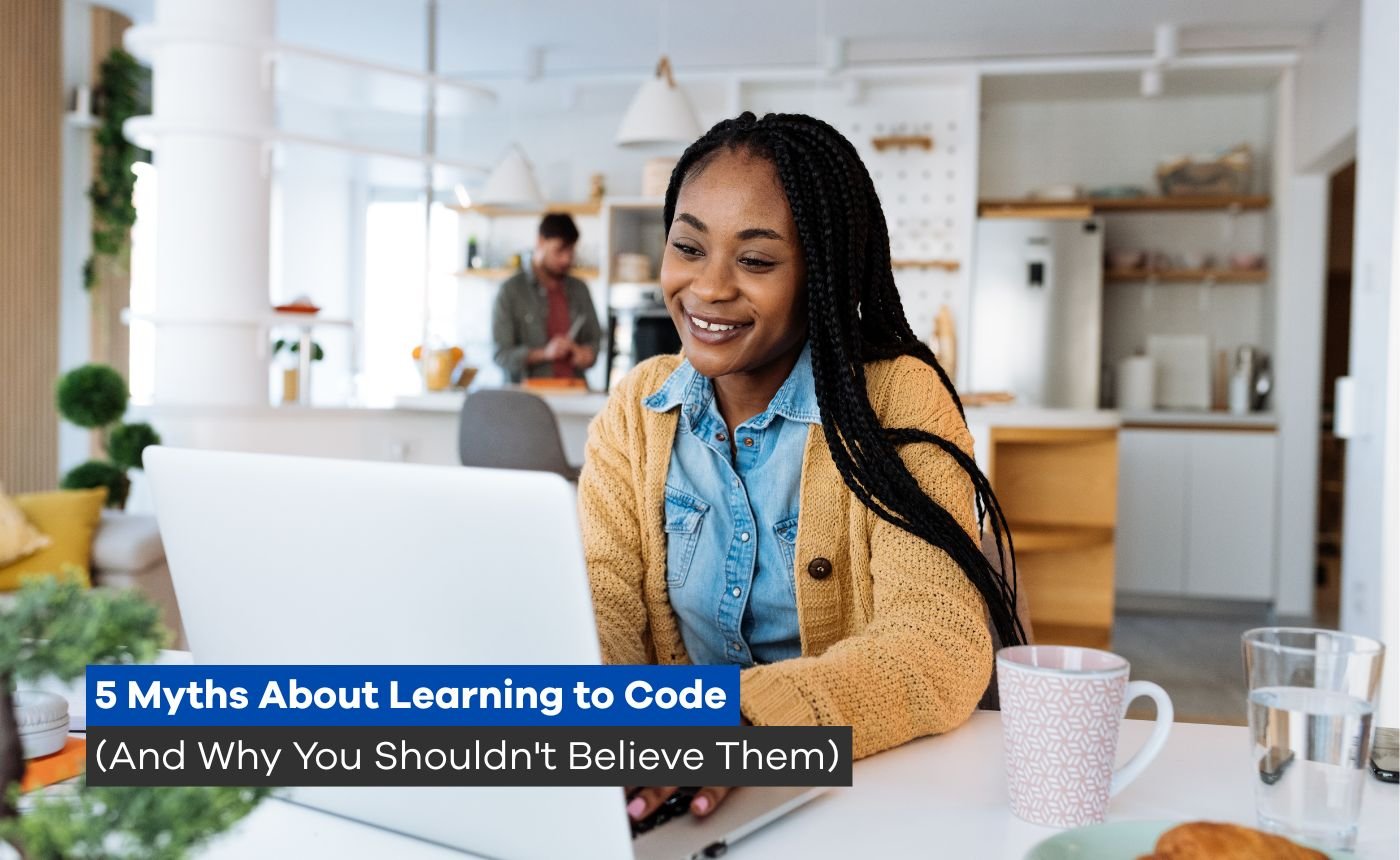
Picture this: You open a movie, and a hacker is sitting in a dark room. Green text is scrolling down the screen faster than a keke on a highway. They are typing furiously, breaking into a bank’s mainframe in seconds.
You look at that and think, “Wow. I could never do that. I’m just a regular student.”
This is the “Matrix Effect,” and it is stopping thousands of brilliant young Nigerians from stepping into their purpose.
As an educator and founder of Baptist EdTech, I see this fear every day. I meet students who are creative, smart, and full of potential, but they disqualify themselves before they even write their first line of code. They believe that tech is only for “geniuses,” or people with rich parents, or those who have been using computers since they were babies.
I am here to tell you the truth: The barriers are in your head, not in the computer.
God has given you a mind capable of incredible things. Don’t let fear bury your talent. Let’s look at the 5 biggest lies people tell themselves about coding—and the truth that will set you free to start building today.
Myth #1: “I Need to Be a Math Genius”
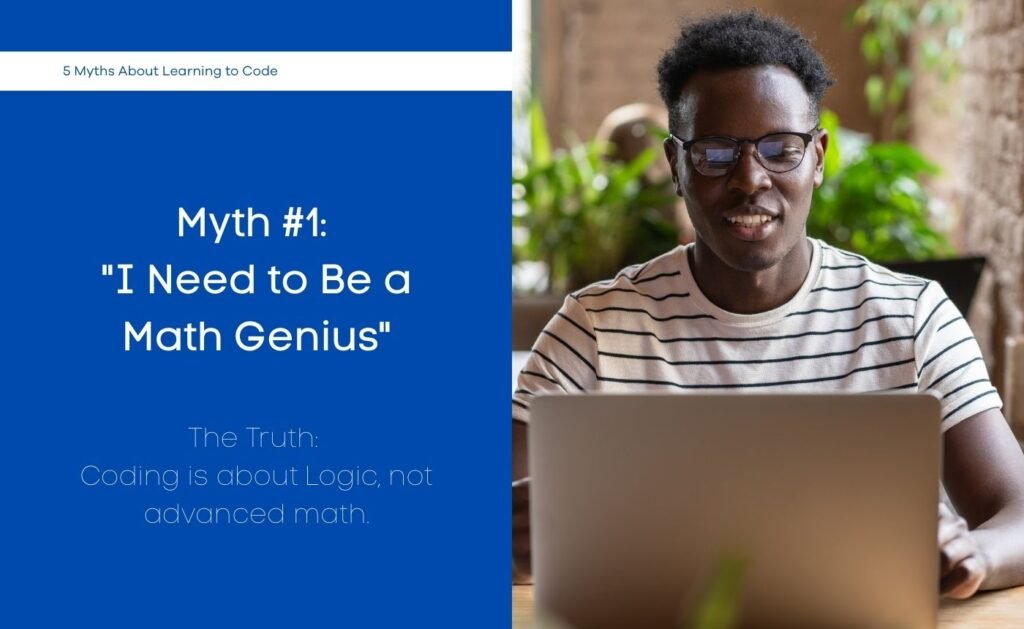
This is the number one excuse I hear. People think that to be a programmer, you need to get an ‘A’ in Further Maths or know how to solve complex Calculus problems in your head.
The Truth: Coding is about Logic, not advanced math.
If you can follow a recipe to cook Jollof rice, you can code. If you can give someone directions from your house to the market (“Go straight, turn left at the junction, stop at the blue gate”), you have the logic to code.
Programming is simply giving a computer a set of instructions to solve a specific problem. It is about breaking a big task into small, orderly steps. As Christians, we serve a God of order, not confusion. Coding is just a way of bringing that order to a digital world. You don’t need to be a mathematician; you need to be a problem solver.
Myth #2: “I Need a N1 Million MacBook to Start”
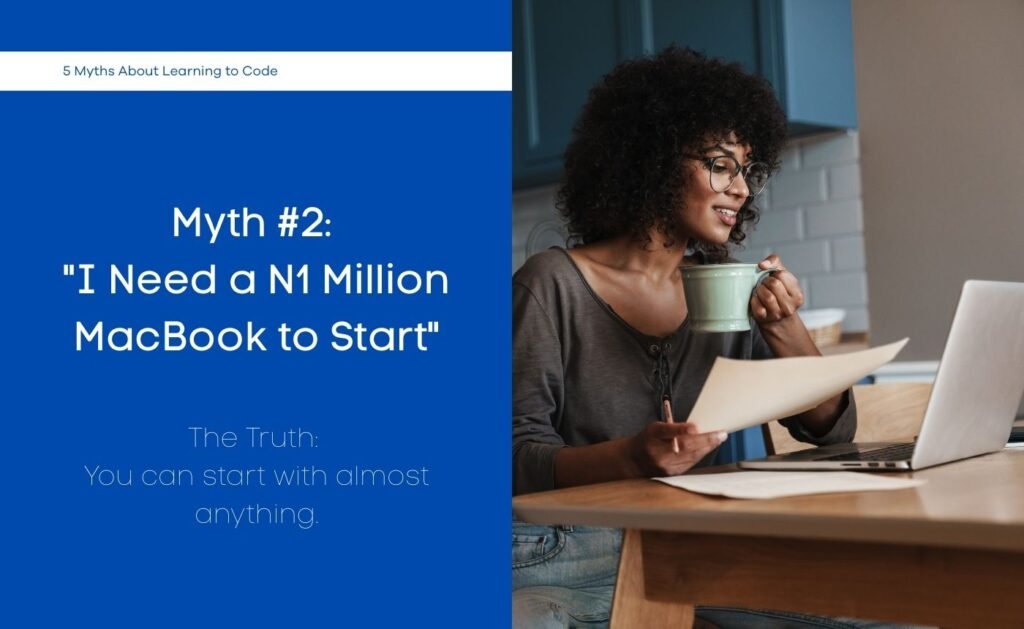
You scroll through Instagram and see “Tech Bros” with expensive setups—three monitors, a brand new “tear rubber” MacBook Pro, and a fancy mechanical keyboard. You look at your older Windows laptop and think, “My machine isn’t powerful enough.”
The Truth: You can start with almost anything.
Some of the best software in the world was written on computers slower than your current smartphone. You do not need an expensive machine to learn HTML, Python, or JavaScript.
In fact, stewardship means using what you have faithfully before you upgrade.
- Cloud Coding: Websites like Replit allow you to write code directly in your browser. If your laptop can open Google Chrome, it can write code.
- Lightweight Tools: Editors like VS Code are free and run smoothly on older laptops.
Don’t wait for the perfect gear. Start with what is in your hand.
Myth #3: “AI Will Replace Programmers Anyway”
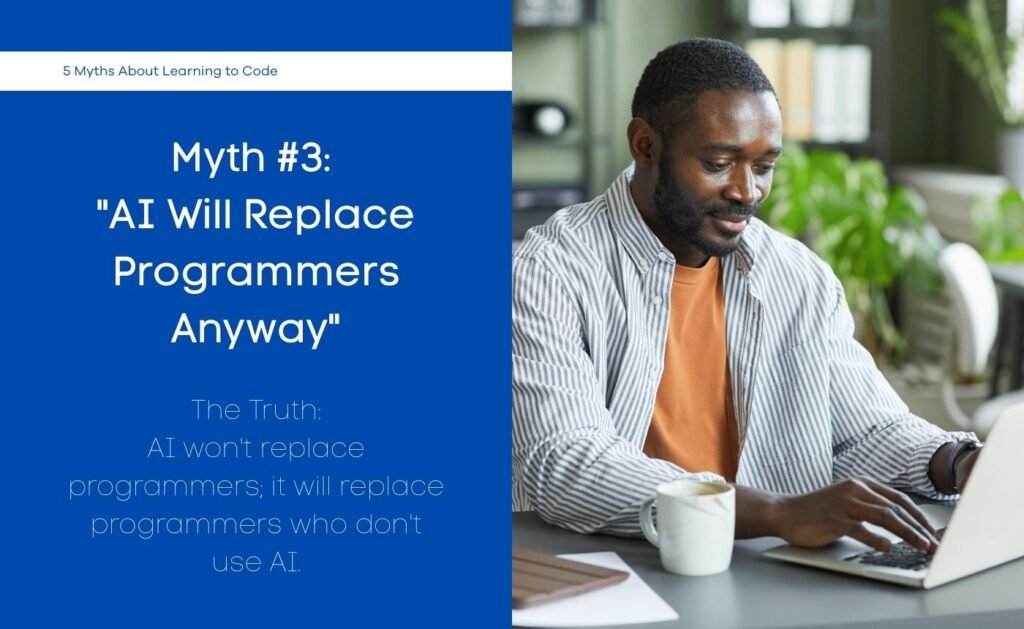
I hear this fear a lot, especially now that tools like ChatGPT and Gemini are so popular. Students ask me, “Sir, why should I stress myself to learn Python if AI can write the code for me?”
The Truth: AI won’t replace programmers; it will replace programmers who don’t use AI.
I am a huge advocate for Artificial Intelligence. I believe it is a tool given to us to make us faster and better. But AI is a “Co-pilot,” not the Captain.
- You need to know the basics: If you don’t understand the code, you won’t know when the AI makes a mistake (and it does make mistakes!).
- You need to prompt it: To get good answers from AI, you need to ask technical questions.
- Creativity matters: AI can write syntax, but it cannot dream up the vision for a new app that solves a specific problem in your community. That vision comes from you.
Learning to code with AI makes you a superhero developer. It doesn’t make you obsolete.
Myth #4: “I Need a 4-Year Computer Science Degree”
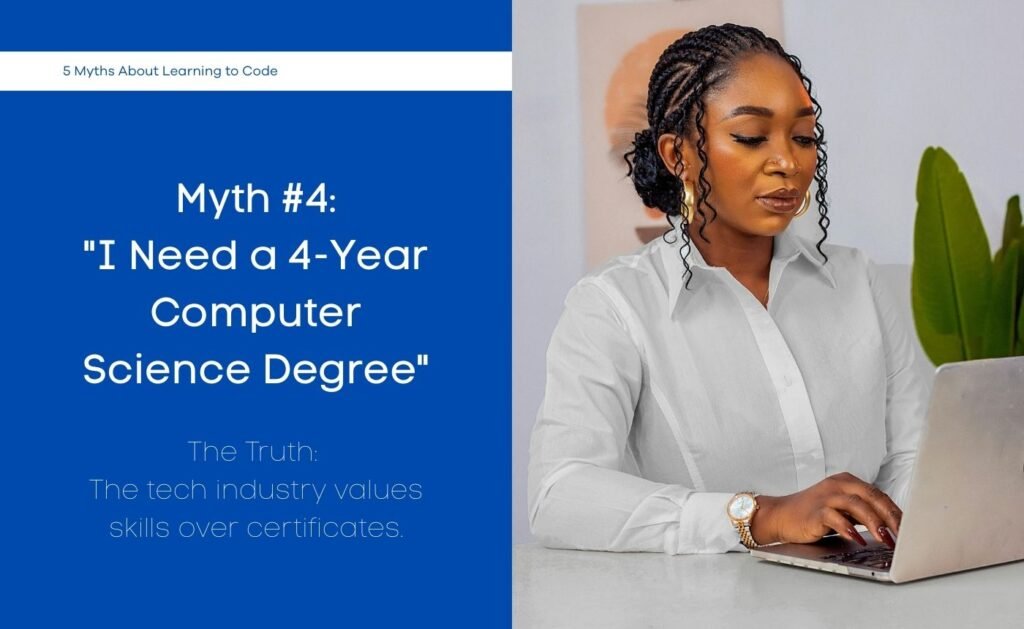
In Nigeria, we place a lot of value on certificates. Parents often feel that if you don’t study Computer Science in the university for four (or five, thanks to strikes) years, you cannot be a tech professional.
The Truth: The tech industry values skills over certificates.
Google, Apple, and local Nigerian startups are less concerned about your degree and more concerned about your Portfolio. They want to know: What have you built?
- Can you show them a website you created?
- Can you show them an app you deployed?
You can learn the fundamentals of coding in 3 to 6 months of focused, hands-on learning at a place like Baptist EdTech. We focus on the practical skills that employers actually need today, not the theory from ten years ago.
Myth #5: “Coding is Boring and Solitary”
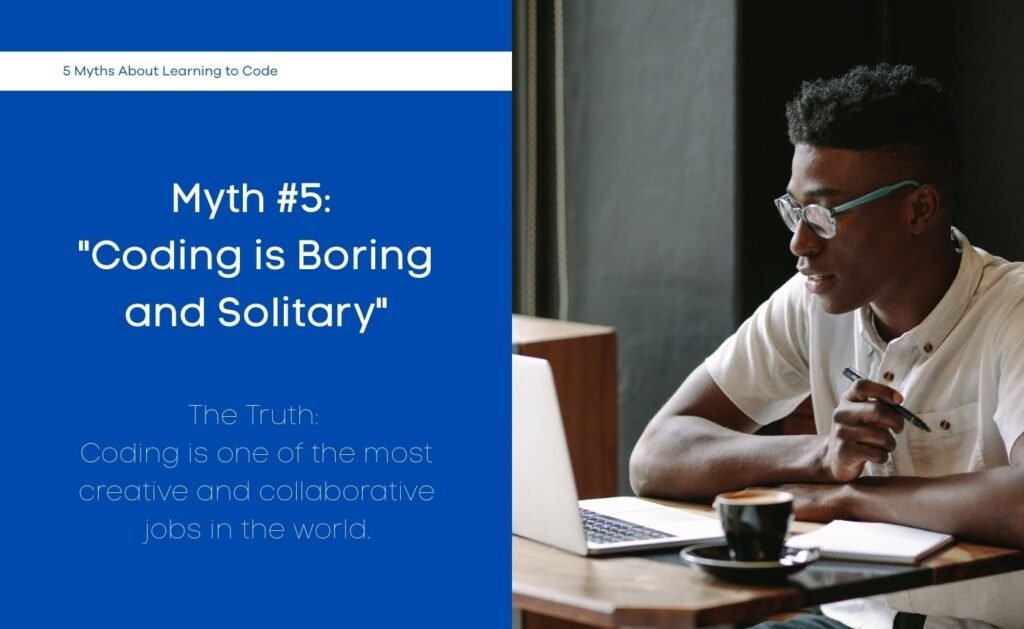
The stereotype of a coder is a lonely guy in a hoodie sitting in a dark basement, drinking energy drinks and never talking to anyone.
The Truth: Coding is one of the most creative and collaborative jobs in the world.
Think of coding like music. A musician uses notes to create a song; a coder uses syntax to create a solution. It is “Digital Creation.”
- It is Teamwork: Most great apps are built by teams. You have to talk to designers, project managers, and users.
- It is Problem Solving: There is a rush of joy when you finally fix a bug or see your idea come to life on the screen.
- It is Purposeful: When you build a solution that helps your church or your community, it is deeply fulfilling.
Conclusion: The Only Barrier is You
We have busted the myths:
- You don’t need to be a math genius.
- You don’t need a rich dad or a fancy laptop.
- AI is here to help you, not hurt you.
- You don’t need a 4-year wait to start building.
The door is open. The demand for digital skills is growing every day. God has placed you in this generation for a reason, and He has given you the tools to make an impact.
So, what is your excuse now?
Stop letting fear hold you back. Stop believing the myths. It is time to start making progress.
Ready to prove these myths wrong? Join our next cohort at Baptist EdTech School. We will give you the mentorship, the community, and the skills you need to become a Christian Digital Leader.
What was the one myth holding you back? Tell us in the comments below!